
Macrophages serve a vital function in the body’s immune system— these white blood cells are in charge of engulfing pathogens, foreign materials and dead cells.
Two new studies from Massachusetts General Hospital researchers have identified two unexpected roles that macrophages play in the body. In the heart, macrophages play a beneficial role, helping heart muscle cells maintain a steady heartbeat. When it comes to fighting cancer, however, macrophages appear to play a detrimental role by interfering with immunotherapy treatments.
Macrophages prove helpful in maintaining a steady heart beat
Researchers have known for decades that macrophages can be found in high numbers around inflamed or diseased hearts to help heal damaged tissue. However, macrophages’ function in healthy hearts has remained a mystery.
A new study from Matthias Nahrendorf, MD, PhD, Director of the Mouse Imaging Program at the Center for Systems Biology at Mass General, suggests that macrophages help the heart function properly and keep its rhythm.
The research began when an MRI and an electrocardiogram of a mouse heart that was genetically engineered to lack macrophages revealed that it was beating too slowly. Comparative tests of a healthy mouse heart revealed that large quantities of macrophages could be found at the atrioventricular node, which passes electricity from the atria to the ventricles of the heart.
Credit: Maarten Hulsmans & Matthias Nahrendorf
Nahrendorf and his team found that these congregated macrophages lend a helping hand by facilitating the conduction process — they prepare heart cells for continuous bursts of electricity by creating gap junctions to connect the cells to each other so the electrical current that regulates heartbeat can flow through smoothly.
This study is a giant step forward in understanding how the heart works and communicates with the body’s cells.
Nahrendorf plans to continue investigating the relationship between macrophages and conduction in the heart to answer more unresolved questions.
When macrophages rebel
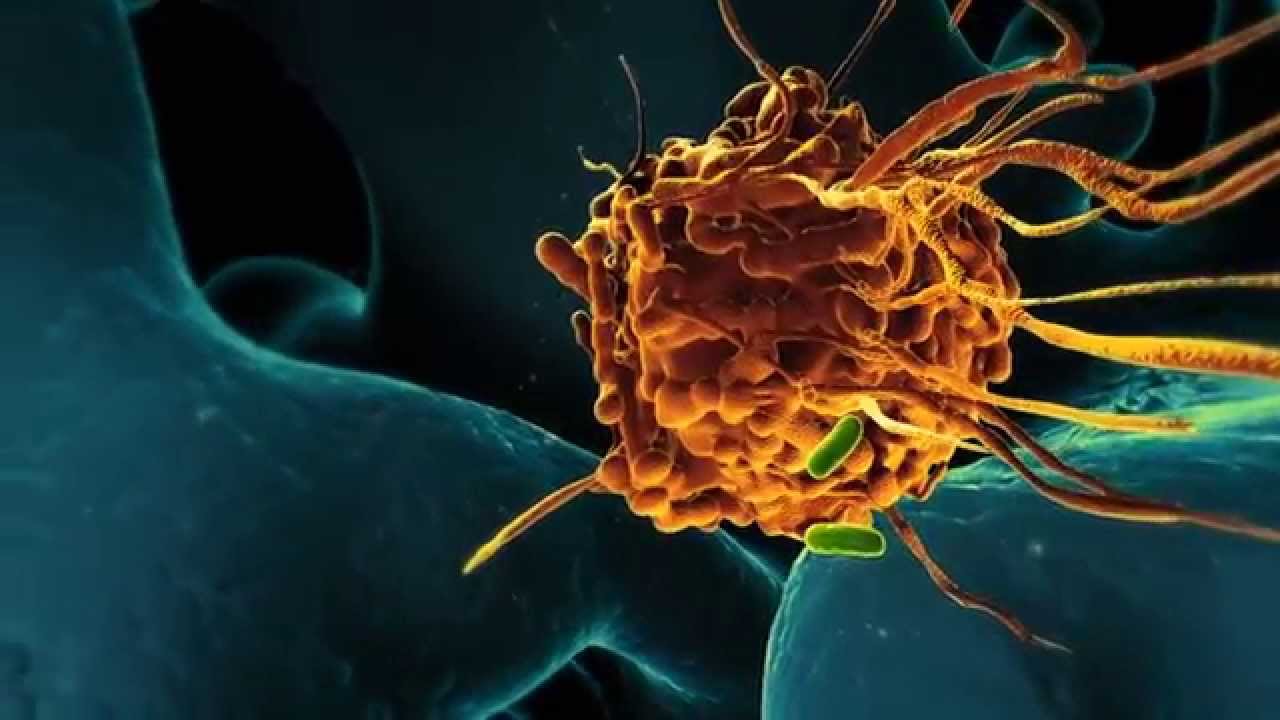
Another recent study from Mikael Pittet, PhD, of the Center for Systems Biology at Mass General, suggests that macrophages aren’t always the good guys.
Using advanced imaging techniques, Pittet and colleagues were able to see how macrophages can render cancer immunotherapy drugs inactive in the body within moments of the drugs being administered.
Credit: Center for Systems Biology, MGH
Immunotherapy drugs are designed to bind to T-cells in the body, another type of white blood cell that relies on chemical signals to identify and kill harmful cells in the body.
One way that tumor cells avoid detection and destruction by these T-cells is by adopting a chemical signal that tumor cells use to inhibit T cells from attacking them, essentially rendering themselves “invisible” to the immune system.
Immunotherapy drugs are designed to override this process by binding to T cells at the receptors that typically receive this “all is well” signal, thus making the tumor cells vulnerable to attack.
However, as Pittet and his colleagues observed, when immunotherapy drugs were administered, macrophages would clear away the drugs from the T-cells within minutes of the treatment, essentially making the treatment ineffective.
Pittet’s observation also explains why this type of promising immunotherapy hasn’t been proven widely successful (the treatment can work extremely well, but only in a minority of patients).
The good news is that Pittet also determined the chemical pathway that was driving this macrophage response, and identified potential strategies for blocking that pathway in mouse models.
More research is needed to determine whether similar strategies improve the results of immune checkpoint blockade in human patients.
About the Mass General Research Institute
Massachusetts General Hospital is home to the largest hospital-based research program in the United States. Our researchers work side-by-side with physicians to develop innovative new ways to diagnose, treat and prevent disease.
Support our research


Leave a Comment