
If you’ve ever spent time in a beauty salon, you know that hair stylists give their clients more than just a new cut, color or style. They often serve as friends and confidants, dispensing advice on relationships, family and work challenges.
But could they also help to prevent unwanted pregnancies and stop the spread of a deadly disease?
That’s the question Massachusetts General Hospital researcher Ingrid Bassett, MD, MPH, will be exploring in a pilot study in the township of Umlazi near Durban, South Africa.
Dr. Bassett, an infectious disease physician at the Medical Practice Evaluation Center and a Weissman Family MGH Research Scholar, is hoping this out-of-the-box approach will increase access to contraception and HIV prevention treatments for women in South Africa between the ages 15-34.
Women in this age group are at high risk for both unplanned pregnancies and HIV infection, the consequences of which can be life-changing.
“This is critical period where women are trying to finish their education and establish themselves in their careers,” Bassett explains. “It’s an exciting group to be thinking about and working with.”
Barriers to Care
Bassett first visited South Africa as an infectious disease fellow in 2004. At the time, the United States Presidents’ Emergency Plan for AIDS Relief (PEPFAR) was launching and the size and scope of HIV treatment and care services were rapidly increasing.
While Bassett was encouraged to see the expansion of services, she was troubled to learn they were not always reaching those who needed them the most.
She explains that in South Africa, most HIV positive individuals don’t seek treatment until they feel sick. This not only increases the likelihood of transmitting the disease to others in the meantime, but also increases the risk of more serious health problems down the line.
Of those who are diagnosed with HIV, less than half go on to receive adequate treatment, Bassett says. The gap is due in part to an overcrowded public healthcare system, a lack of awareness about options for HIV treatment and prevention, and the stigma that can accompany an HIV diagnosis.
Connecting at-risk women to health services is even more critical now that there is a new medicine called pre-exposure prophylaxis, or PrEP, which can reduce the risk of contracting HIV by up to 90%. However, many women are not aware that PrEP is available, or are worried about the stigma of taking an HIV medication when they do not have the disease.
The Salon Connection
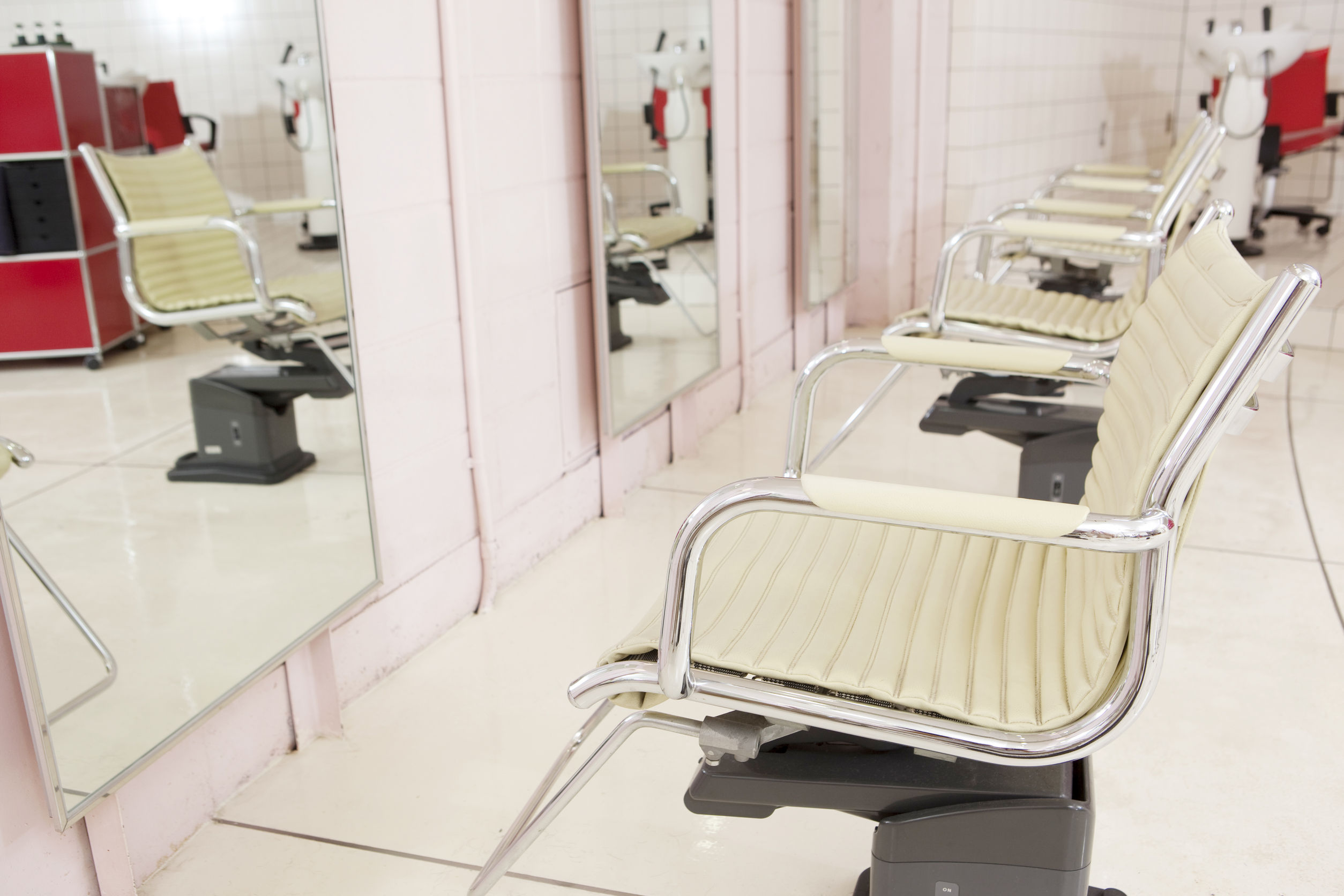
Bassett hopes that by providing easy access to HIV testing, PrEP and contraception within the comfortable and familiar setting of a beauty salon, she can connect more women to care.
“Women come to the salon frequently,” she says. “They spend a fair amount of time there, and there is this camaraderie between the stylist and the client, and among the clients themselves. They talk about personal things and it is kind of a community safe space.”
The concept for the pilot study is for stylists to initiate conversations about the new services with their clients, and then refer those who are interested to an on-site nurse. The nurse could then assess the client’s eligibility for contraception and/or PrEP and dispense treatments at the salon.
“We’ve done surveys of hair salon owners, stylists and clients to understand whether people would be interested, and we were happy to see the extent to which the stylists are in favor of this. They see themselves as being able to incorporate messages about HIV prevention and family planning into conversations with their clients,” Bassett says.
There will still be some challenges along the way. It will be important to position the services as something that enhances—not detracts—from the salon’s offerings. It may also take time before women are comfortable getting HIV testing and treatment.
There will also be some women who test positive for HIV during the screening, Basset acknowledges.“We need ways to help people cope with that. We are thinking about ways to expedite those who test positive into the clinic.”
Parallels Closer to Home
Closer to home, Bassett is collaborating with the Massachusetts Department Public of Health and the Health Innovations organization to provide community-based HIV screening and PrEP treatments to young Latino and black men who have sex with other men (MSM).
While the target audiences seem very different at first glance, the outreach strategies are similar. In both cases, health workers are going out into the community to make it easier for underserved populations to access the care they need.
The Impact of the MGH Research Scholar Award
Bassett was one of five MGH Research Scholars named in the Class of 2018 and one of 55 scholars to be named overall since the program launched in 2011.
Supported by philanthropic donations, the program provides Mass General researchers with unrestricted funding ($100,000 per year for five years) to pursue new and/or unproven avenues of science.
Bassett’s award will help to support the pilot study in South Africa. If it is successful, the data she collects could help her apply for federal funding to implement and evaluate the program on a larger scale.
“What’s so empowering about the MGH Research Scholar award is that it allows people to think about more out-of-the-box ideas and pursue them,” she says. “It’s an incredible vote of confidence from the institution and the program’s sponsors.”
“They are trying to foster people’s passions—and what they see as potential solutions—without trying to make them fit into any particular framework. I really appreciate that.”
Learn more:
- Dr. Bassett’s physician profile
- Medical Practice Evaluation Center website
- About the MGH Research Scholars program
About the Mass General Research Institute
Massachusetts General Hospital is home to the largest hospital-based research program in the United States. Our researchers work side-by-side with physicians to develop innovative new ways to diagnose, treat and prevent disease.
Support our research


Leave a Comment