
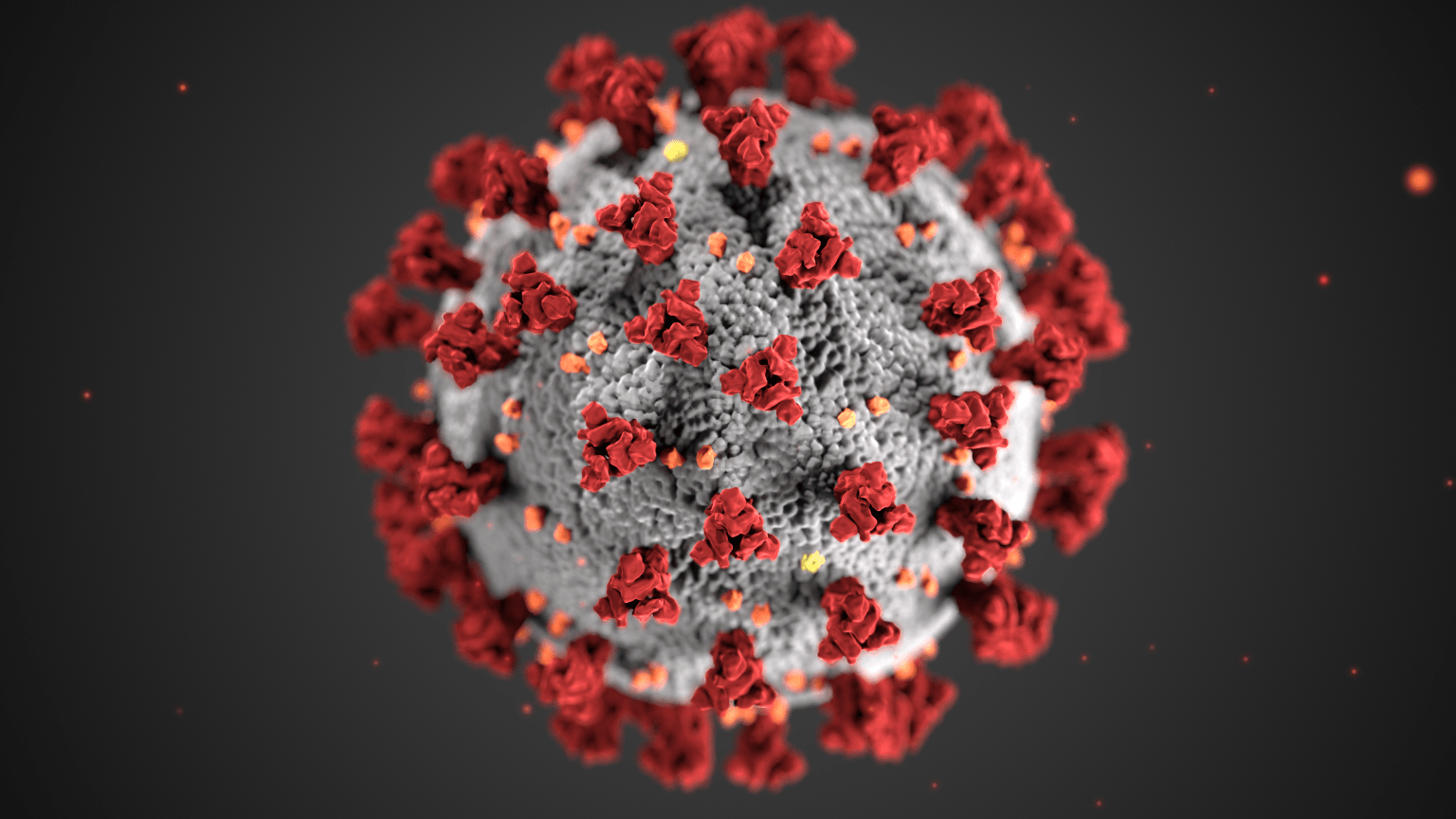
An illustration of SARS-CoV-2, the virus that causes COVID-19
There is no doubt that the novel coronavirus has changed our lives forever. As we practice physical distancing to flatten the curve, healthcare workers across the globe are working around the clock to care for patients in need.
While the healthcare workers are on the front lines, scientists are working equally hard behind the scenes to understand a disease they’ve never seen before. They are banding together and learning new things every day to get to the bottom of COVID-19, but first they must understand SARS-CoV-2—the virus responsible for the disease.
At a recent Morning Rounds presentation at Massachusetts General Hospital, Galit Alter, PhD, an investigator at the Ragon Institute of MGH, MIT and Harvard and Samana Cay MGH Research Scholar 2017-2022, discussed what scientists have learned so far about the virology of SARS-CoV-2, and what makes it different from diseases we have seen before.
What is a Coronavirus?
Coronaviruses are a large family of viruses that can be found broadly across mammals and birds. They are named after the crown-like spike proteins that surround them.
They typically cause limited disease in their host species, Alter explains, but, for reasons that are currently unknown, they can occasionally mutate and cross species into human, causing diseases that range in symptoms and severity.
“Virus hunters over the years have documented over 20 different zoonotic (animal to human) coronavirus, seven of which have been documented in just the last 15 years, pointing to an accelerated transmission from animal to human,” says Alter.
Seven forms of coronavirus are known to affect humans. Four of them cause diseases similar to the common cold (229E, NL63, OC43 and HKU1) and the other three originated in animals and cause more severe diseases (SARS, MERS, and SARS-CoV-2).
The coronavirus currently taking the world by storm shares 82% of the structure of the SARS-CoV virus that caused SARS outbreak of 2003, but it is most similar to a coronavirus found in bats. That’s why the virus is called SARS-CoV-2: severe acute respiratory syndrome corovirus-2. The disease it causes was named COVID-19, which stands for coronavirus disease of 2019.
How is the SARS-CoV-2 Structure Unique?
“Coronaviruses are large, enveloped, positive-stranded RNA viruses that steal their membranes from the host, which they decorate with a spiked protein involved in binding and fusion to their target cell,” says Alter. Many scientists believe understanding the body’s immune response to this spiked protein could be key.
In a recent article by Ed Yong for The Atlantic, experts from Columbia University and Scripps Research Translational Institute explain that the structure and function of the SARS-CoV-2 spikes are unique.
The spikes are how viruses attach to their host cell, and the stickier the spike the more efficient the virus is at infecting and spreading. According to Angela Rasmussen, PhD, of Columbia University, the SARS virus that reared its head in 2003 formed weak bonds with host cells, which meant a lot more viruses were necessary in order to penetrate the cell and infect the host.
SARS-CoV-2, on the other hand, has spikes that stick to human cells like Velcro, forming a very strong bond with a receptor called ACE2, which is abundant throughout the human body. These strong bonds means less SARS-CoV-2 viruses are necessary to start an infection. “It’s likely that this is really crucial for person-to-person transmission,” says Rasmussen.
Another crucial aspect of the SARS-CoV-2 virus is they more easily transform into an infectious state upon entering the body. Spike proteins are made up of two halves that activate and allow for infection of the host when they separate, and SARS-CoV-2 spikes separate very easily when exposed to a common enzyme called furin.
Furin is found in many tissues throughout the body, says Kristian Andersen, PhD, of Scripps Research Translational Institute. “This is probably important for some of the really unusual things we see in this virus.”
How Did It Spread to Humans?
The initial cases of COVID-19 were linked to the direct exposure of humans to a live animal market in China, suggesting animal-to-human transmission caused the initial infections. Soon after, subsequent infections were noted in individuals who had never been to the market, suggesting the potential for human-to-human transmission, Alter says.
An animal virus would not usually be able to affect humans unless it has mutated in a certain way, which is what experts believe was the case in SARS-CoV-2. Once it made the jump, the virus’ ability to spread undetected, coupled with globalization, allowed the virus to spread at an accelerated rate, Alter explains.
SARS-CoV-2 is transmitted primarily through droplets (from coughing or sneezing) and contaminated surfaces following unprotected contact. But like other coronaviruses, “SARS-CoV-2 is sensitive to ultraviolet rays and heat, and can be effectively inactivated by lipid solvents,” says Alter.
How to Protect Against Infection
What’s one of the most simple and effective ways to inactivate SARS-CoV-2 if you’ve picked it up from a surface? Plain. Old. Soap.
While alcohol-based hand sanitizer may feel like the best solution because of the harsh chemicals, it is actually not as effective as soap—especially if your hands have lotion, sweat or other contaminants on them that dilute the sanitizer.
Washing hands with soap for 20 seconds can rip apart the lipid membranes surrounding the virus and leave everything in useless pieces that are then safely washed away.
What’s Next?
The situation surrounding the COVID-19 pandemic changes every single day. Health care workers are caring for patients, scientists are working on tests and treatments, cleaning crews everywhere are disinfecting as best they can, grocery store workers and pharmacists continue to show up for us and non-essential businesses have closed to limit crowding.
There is still much to uncover about SARS-CoV-2 and COVID-19, but from what experts have learned so far it seems that SARS-CoV-2 has evolved to be a very “smart” virus that causes what can become a very serious disease.
The best way we can help is to give the experts the time they need to tackle this and protect those who are at high risk of severe complications by limiting contact with others.
To stay up-to-date on the latest COVID-19 developments coming out of Mass General, visit massgeneral.org/coronavirus.
COVID-19 Research at Mass General
Researchers and clinicians at Massachusetts General Hospital Research Institute are mobilizing to develop new strategies to diagnose, treat and prevent COVID-19. Learn more.


Leave a Comment