
The following is a guest blog post written by Kirsten Dickins, PhD, AM, MSN, FNP-C, Connell Postdoctoral Fellow in Nursing Research at the Yvonne L. Munn Center for Nursing Research at Massachusetts General Hospital.
Dickins’ research focuses on identifying and reducing the barriers that homeless individuals experience in accessing and optimally utilizing healthcare services.
“Where are you going to sleep tonight?” I asked this question of every patient who I saw on the morning of release from the Supportive Release Center at Cook County Jail in Chicago, where I worked as a nurse practitioner.
The vast majority of patients I saw were homeless, offering answers that fell within one of three categories: “I don’t know,” “the shelter,” or “outside.” Early in the COVID-19 pandemic, I realized that my patients were those who would be most affected by disease transmission: those who are unable to shelter-in-place, for whom social distancing may be considered a privilege.
Poverty, Health, and Homelessness
As a postdoctoral fellow at the Munn Center for Nursing Research at Mass General, my research focuses on understanding the health of under-studied vulnerable populations, namely older homeless women. Entering the pandemic, I took issue with the popularly espoused notion that the virus does not discriminate. Based on my nursing research and clinical practice, I anticipated that in many areas the structural response would show well-worn patterns of bias.
COVID-19 has struck racial and ethnic minority communities with increased contraction and higher mortality rates, hitting working-class neighborhoods and population-dense lower-income areas comparatively harder than more affluent communities. These disparities have resulted in large, typically low-income cohorts who are “more exposed, fragile and ill.”
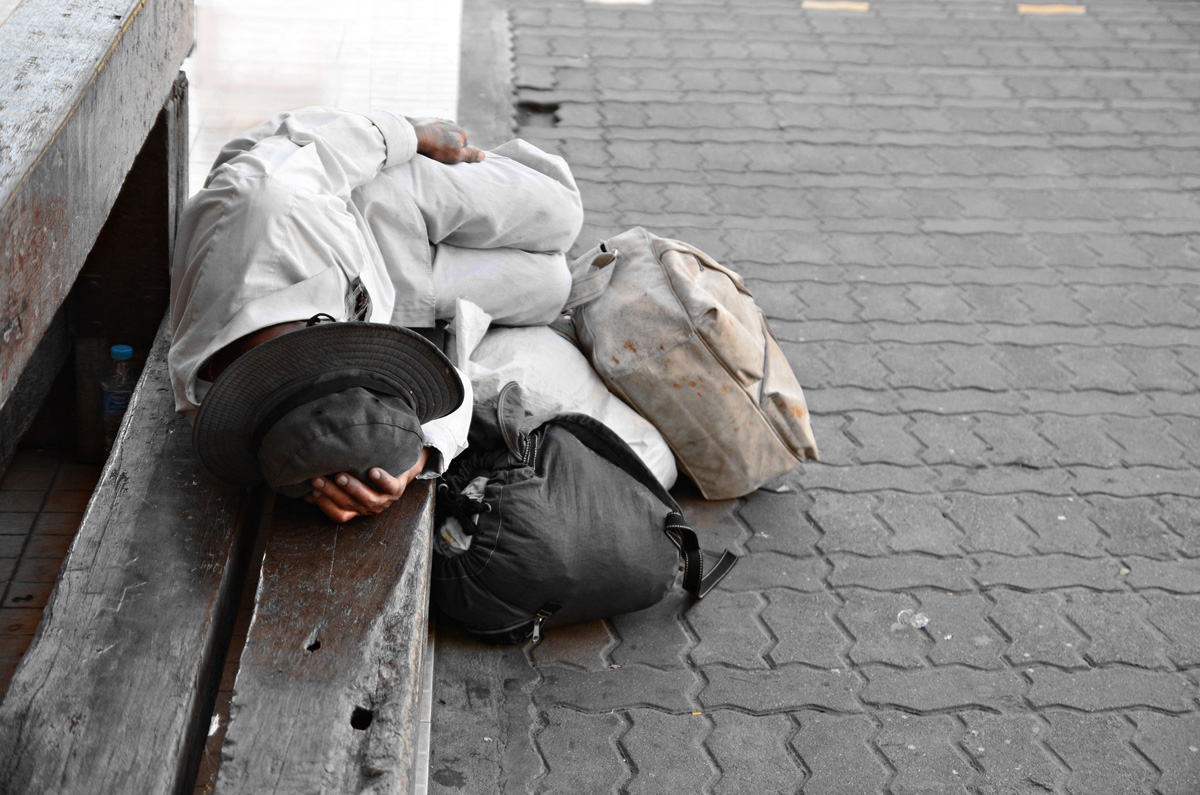
Homeless persons are especially vulnerable, often living in environments that are conducive to disease epidemics. Additionally, many homeless persons show high rates of underlying medical comorbidities, placing them at elevated risk of experiencing severe disease and related complications.
Across the United States, many homeless service and public health agencies have moved swiftly to implement plans to prevent and mitigate the impending impact of the pandemic. Resources have been allocated to expand shelters, provide alternative housing, and improve hygiene, but these responses are only temporary. As we see the hopeful prospect of the curve flattening, and alternative care and recovery sites prepare to dial back services, realizing the larger social picture matters now more than ever.
High Unemployment Rates Observed During the COVID Pandemic Threaten Increases in Homelessness
Since mid-March, approximately 26 million Americans have filed for unemployment. Housing cost-burdened individuals and families that struggled to stay on top of rent payments before, now face additional uncertainty. State and local governments have temporarily halted evictions and the federal government has issued an eviction moratorium for renters residing in federally financed units, but these solutions are only temporary.
Before COVID-19, a substantial and increasing portion of United States households struggled to find affordable housing. We can anticipate that on the other end of COVID-19, the affordable housing crisis will be felt even more acutely by the millions of Americans who are and may continue to be without job-related earnings. These individuals are threatened by the prospect of spiraling briskly into homelessness—and all the health risks that accompany it.
Moving Forward Together to Advance Care of the Homeless
Since the 1918 influenza pandemic, nurses have banded together on the front lines, to provide compassionate care and learn firsthand how vulnerable populations continue to be disproportionately impacted by disease outbreaks. With cautious optimism that we will together begin to flatten the curve, nurses and other health care professionals must be prepared to lead the next steps in patient advocacy and public health.
Gleaning insights from observations and care experiences at shelters and alternative care sites, nurses and other health care providers can establish innovative care models and research questions to enhance care delivery and engagement with homeless populations. Understanding the economic, environmental and social contexts in which society’s most vulnerable will continue to live and work is vital to facilitating and sustaining public health and safety.
Acknowledging the lessons that we have learned from the COVID pandemic, including the need for systematic investment in the social determinants of health—such as with stabilization through shelter and implementation of supportive housing programs—will help promote health and sustained care engagement among the vulnerable communities we serve.
COVID-19 Research at Mass General
Researchers and clinicians at Massachusetts General Hospital Research Institute are mobilizing to develop new strategies to diagnose, treat and prevent COVID-19. Learn more.


Leave a Comment