
Ventilators are typically used in modest numbers, but the highly infectious COVID-19 and its potential to lead to severe respiratory issues has made them crucial in hospitals everywhere. The rapid spread of the disease has created a situation where these devices are in short supply across many healthcare systems.
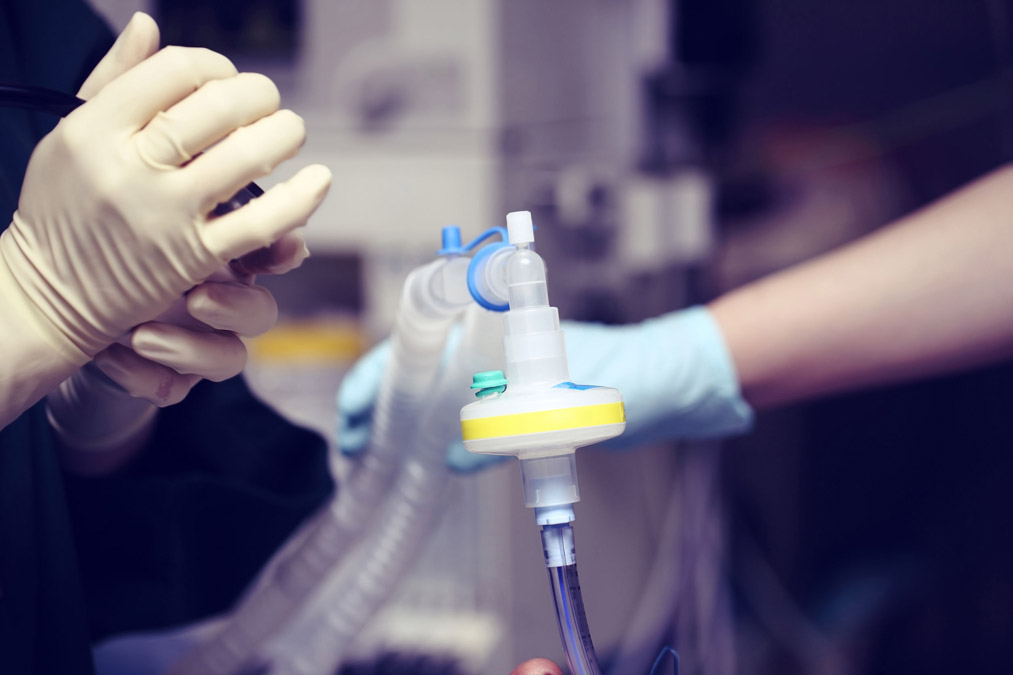
But how do ventilators actually work? And why do COVID-19 patients need them?
George Alba, MD, a clinician in Pulmonary and Critical Care Medicine at Massachusetts General Hospital and a researcher at the Mass General Research Institute spoke with us to answer some of these questions.
Basic Lung Anatomy
The lung has two primary functions: to bring oxygen into the body and to remove carbon dioxide from the body. When taking a breath, oxygen travels through the windpipe and into branch-like structures called bronchi, which end in small sacs called alveoli.
Although small in size, alveoli play a critical role in oxygenating the blood that is pumped throughout the body. When a person inhales, millions of alveoli inflate like small balloons and act as a thin surface through which oxygen enters the tiny blood vessels that surround them. Upon exhaling, the carbon dioxide that is simultaneously exiting the tiny blood vessels into the alveoli is released from the lungs as waste.
What Do Ventilators Do for COVID-19 Patients?
In severe cases of COVID-19, the lungs and their alveoli become compromised, leading to a condition called acute respiratory distress syndrome (ARDS). In ARDS, fluid leaks into the alveoli from the blood vessels surrounding them and the lungs become stiff, making it difficult to get oxygen in the blood. This can leave the body starved for oxygen.
That’s where the ventilator comes into play: it helps lessen the load on a patient’s lungs by breathing for them and reducing injury to the lung.
To do this, the patient must be sedated so a clinician can insert an endotracheal tube into the windpipe, a process called intubation. The tube is then attached to the ventilator machine, which can then push air into the lungs to provide more oxygen to the body.
In some cases, however, increasing oxygen levels is not enough. Due to the increase in fluid, alveoli can sometimes collapse. “Imagine trying to blow up a balloon that has a sticky residue on the inside,” says Alba. “You would have to work really hard to inflate it.”
It is in these cases where the ventilator can also deliver increased pressure to keep the alveoli open during the breathing cycle. But delivering the proper levels of oxygen and pressure is a delicate balance, Alba explains. Too much pressure can cause injury and more inflammation, but too little could mean a patient isn’t getting enough oxygen.
Each patient’s lungs are different, so it is up to clinicians to figure out the best formula, but generally using lower levels of pressure is the safest option. “What we try to do is apply what we know about what works best for ARDS, and then for each individual patient we have to make decisions about how we set the ventilator specifically for them. It takes a tremendous amount of work and the dedicated respiratory therapists are key to making this happen for every single patient,” says Alba.
The amount of time someone can rely on a ventilator is variable and depends on why they were put on one in the first place, Alba explains. For COVID-19 patients so far, the average time can range from one to two weeks. This could change as we learn more about the disease, but for right now the need for long periods of mechanical ventilation coupled with the high rate of ARDS seen in COVID patients has made ventilators scarce in some medical settings.
COVID-19 Research at Mass General
Researchers and clinicians at Massachusetts General Hospital Research Institute are mobilizing to develop new strategies to diagnose, treat and prevent COVID-19. Learn more.


Leave a Comment