
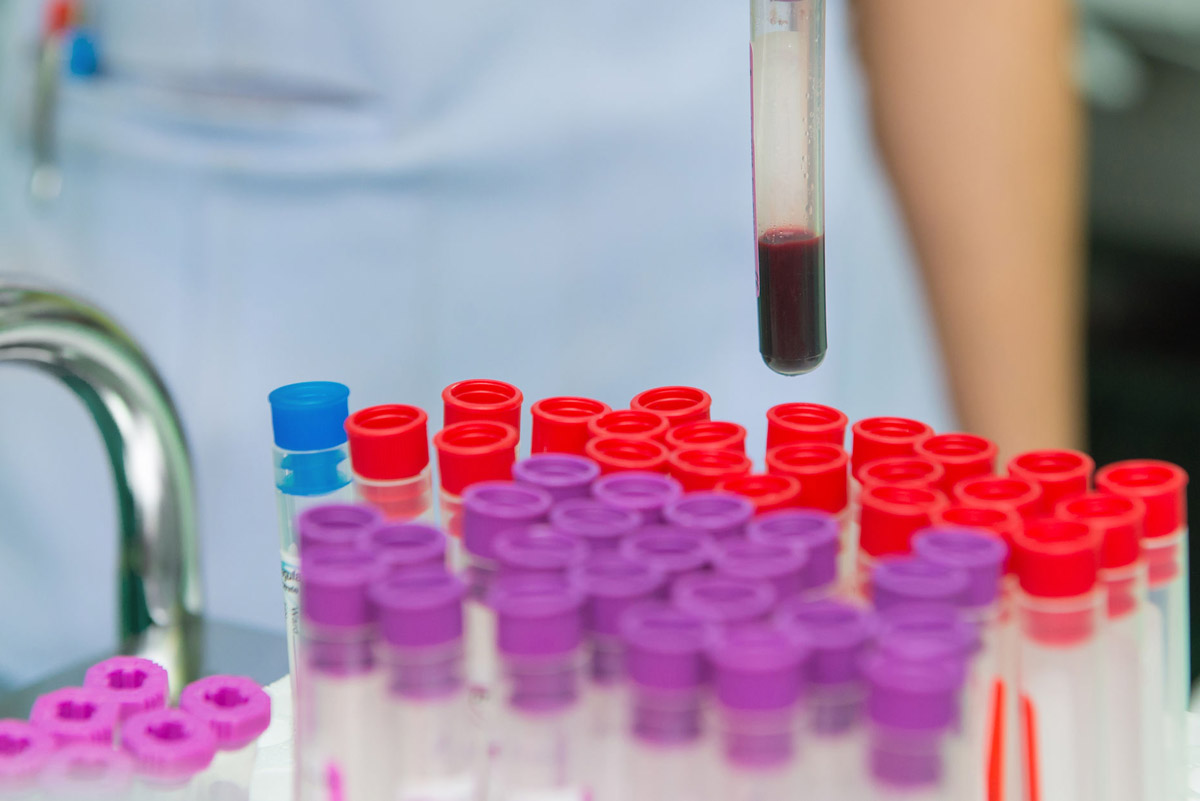
Researchers at the Ragon Institute of MGH, MIT and Harvard have played a key role in the development of serological tests—blood-based tests for antibodies to the SARS-CoV-2 virus—to meet a crucial need in the COVID-19 response.
As part of the new Massachusetts Consortium on Pathogen Readiness (MassCPR), they are working to develop and invest in the research process and supporting infrastructure to address the current global COVID-19 pandemic—as well as better position the consortium for future outbreaks.
At a recent virtual town hall led by Bruce Walker, MD, MassCPR steering committee member and director of the Ragon Institute, researchers discussed what they’ve learned so far about COVID-19 antibodies and their vision for serology testing can inform plans for returning to work.
Developing an ELISA Test
Researchers from across MassCPR began developing a SARS-CoV-2 antibody test in-house in early February 2020, and in just two months the test has been disseminated across the United States, says Galit Alter, PhD, Samana Cay MGH Research Scholar 2017-2022, Ragon Institute Group Leader, and co-chair of the MassCPR pathogenesis working group.
Through a true team effort, MassCPR scientists were able to scale up reagents, identify commercial partners to scale up production and “integrate across a dozen sero-epi studies within the state, as well as across the country,” Alter explains.
Once these building blocks were in place, researchers began an iterative process to improve the test’s quality and ensure it met all necessary requirements established by the FDA.
The team optimized the test, called an ELISA (enzyme-linked immunosorbent assay), so it could both detect the presence of antibodies and measure the amounts of different types of antibodies, ensuring that the results were both quantitative and qualitative.
Researchers will continue to develop more robust tests, but they have already gathered interesting findings with the first generation tests.
According to Alter, in a typical viral infection, antibody response usually occurs in a certain order, measured by the “peak,” or highest concentration, of the antibodies. Typically, IgMs peak first during the early response to the virus, then IgGs as the body mounts a more targeted immune response, and finally IgAs.
But with SARS-CoV-2, IgMs and IgAs peak at the same time followed by IgGs a few days later. The cause of this unusually early IgA response is unknown, but the Alter lab is will be investigating this and other aspects of the SARS-CoV-2 immune response.
Point of Care Testing
While the ELISA tests are highly accurate and provide detailed information about both the presence and type of antibodies, the tests have to be conducted in a lab setting.
Wilfredo Garcia-Beltran, MD, a research fellow in the Department of Pathology at Mass General, has been a part of the team working on portable, rapid seroepidemiological tests that can be used in a variety of settings–from doctor’s offices to the workplace to at home.
With the help of BioMedomics, Garcia-Beltran and colleagues validated a point-of-care COVID-19 test that produces a result within ten minutes using a drop of blood from a person’s finger.
The point-of-care tests can indicate the presence of IgM and/or IgG antibodies at an accuracy comparable to the ELISA tests, but they cannot quantify the levels of each type.
“If you combine the BioMedomics IgG/IgM results, it’s directly comparable to the ELISA result,” says Beltran. “We get as much sensitivity, and a perfect 100% specificity with this point-of-care kit.”
It’s still too soon to know whether the presence of antibodies to SARS-CoV-2 is an indication that the individual is immune to further infection, says Alter. “What these antibody tests provide is a measure of exposure.”
Returning to Work
Before people can return to work, it is important to understand where we are in the epidemic curve, says Megan Murray, DPH, MD, a professor in the Department of Global Health and Social Medicine at Harvard Medical School and co-chair of the epidemiology working group in the MassCPR.
In a very basic model of transmission, people fall into three categories:
- Susceptible
- Infectious
- Recovered (assuming those who have recovered are immune)
With this simple model, as the number of infectious people declines, so does the number of susceptible people. That is when the epidemic ends, says Murray.
“That’s what we mean by ‘herd immunity.’ When there are too few susceptible [people] left in the population to provide the fuel as it were, for the infectious process to continue.”
The amount of herd immunity needed for an epidemic to subside varies depending on the virus’ basic reproduction number, the average number of cases generated from one infected person.
Using a basic formula, the COVID-19 epidemic would be projected to end when between 60%-70% of the population becomes infected, but the reality is not so simple, Murray explains.
The basic formula does not account for age, level of infectiousness or how quickly immunity wanes, “so there’s a lot we can’t yet model,” says Murray.
However, the measures being taken to gather qualitative and quantitative information about the epidemic via seroepidemiological testing will help experts make informed decisions about when and how to proceed with reopening the economy.
Experts must also keep a close eye on if or when herd immunity from the virus could wane because introducing susceptible individuals into a community that is thought to be immune could result in new infections.
“If we send people back to work because they’re either immune or because we think they have no other contacts besides with immune people, then we really need to maintain a close community,” says Murray.
COVID-19 Research at Mass General
Researchers and clinicians at Massachusetts General Hospital Research Institute are mobilizing to develop new strategies to diagnose, treat and prevent COVID-19. Learn more.


Leave a Comment