

Science news and discoveries from the Mass General Research Institute
Bench PressBench PressBench PressBench Press
  • Home
  • About
  • Research
    • COVID-19
    • Brain
    • Heart
    • Cancer
    • More…
  • Communicating Science
  • Events
  • Subscribe

Research Suggests Thirdhand Smoke May Be the New Thing For Parents to Watch Out For

    Home Series Five Things to Know Research Suggests Thirdhand Smoke May Be the New Thing For Parents to Watch Out For

    Research Suggests Thirdhand Smoke May Be the New Thing For Parents to Watch Out For

    By gir0 | Five Things to Know, Medicine, Pediatrics | 0 comment | 11 December, 2018 | 0

    Many people have heard about secondhand smoke or have experienced it being near a smoking bystander. But what about thirdhand smoke?

    Thirdhand smoke is the tobacco smoke residue remaining after a cigarette has been smoked. It can be residual smoke left in the air, but can also accumulate on surfaces, furniture, clothing and in dust.

    A recent study found that thirdhand smoke may be a new cause for concern among parents because of its ability to accumulate unbeknownst to the naked eye and remain toxic for extended periods of time. Unlike first and secondhand smoke, thirdhand smoke remains harmful even if smoking occurs when children are not physically present.

    The project manager for Mass General’s Clinical Effort Against Secondhand Smoke Exposure (CEASE) program, Jeremy Drehmer, MPH, CPH, spoke on the implications in Pulmonary Advisor and we put together five things to know.

    1. Anyone can be exposed to thirdhand smoke by inhaling it, ingesting it or absorbing it through the skin.
    2. Since secondhand smoke refers to smoke in the air, it can be easily removed by ventilation. Thirdhand smoke is difficult to remove from household furniture and surfaces, and even public spaces, which allows for a much longer timeframe for exposure.
    3. Research shows thirdhand smoke contains chemicals that cause DNA damage, increases cancer risk, and has been linked to common pediatric conditions such as low birth weight, asthma, prediabetes and metabolic syndrome and hyperactivity.
    4. Young children are at greater risk for thirdhand smoke because they typically spend greater amounts of time at home, have smaller bodies, spend time on the ground or furniture where the smoke has settled, and young children often put their hands and toys in their mouths.
    5. While the best option to avoid thirdhand smoke may be to quit smoking completely, another solution could be to keep homes and cars completely smoke-free, even when children are not present.
    Read the review

    About the Mass General Research Institute
    Massachusetts General Hospital is home to the largest hospital-based research program in the United States. Our researchers work side-by-side with physicians to develop innovative new ways to diagnose, treat and prevent disease.
    Support our research
    child health, smoking, tobacco

    Related Post

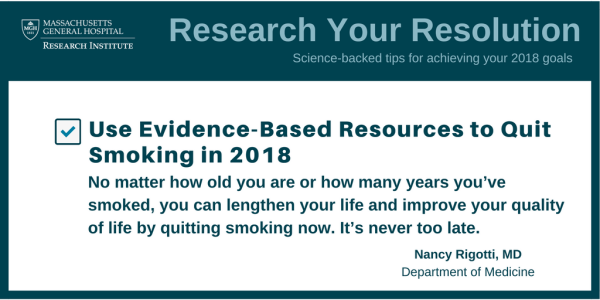
    • Research Your Resolution: Use Evidence Based Resources to Quit Smoking in 2018

      By mghresearch | 0 comment

      Nancy Rigotti, MD Nancy Rigotti, MD, is the Director of the Tobacco Research and Treatment Center (TRTC) at Massachusetts General Hospital.  The Center provides services to help inpatients, outpatients, employees, and community members quit smoking.Read more

    • Five Things to Know About Gaming Disorder

      By gir0 | 0 comment

      Gene Beresin, MD, executive director of the Clay Center for Young Healthy Minds at Massachusetts General Hospital, recently wrote an article about gaming disorder. For those who may not be aware of gaming disorder, or parents who are worried about their child’s gaming patterns, here are five things to know.

    • Image of a girl vaping

      Not All E-Cigarettes are the Same: What Parents Need to Know

      By MGH Research Institute | 5 comments

      For parents worried about the health impacts of e-cigarettes, it’s important to know the difference between systems.

    • Mass General Pediatrician Engages Communities to Make a Lasting Impact on Child Health

      By mghresearch | 0 comment

      Imagine you are a pediatric clinician in an urban community health center. You notice that the majority of your patients have the same triad of conditions – obesity, asthma and behavioral health problems.

    • Law Restricting Use of Off-Road-Vehicles by Young Drivers Helps to Curb Injury Rates, Researchers Say

      By mghresearch | 0 comment

      Researchers at Mass General found that laws restricting youth access to off-road vehicles reduced the rate of injuries caused by the vehicles

    Leave a Comment

    Cancel reply

    Your email address will not be published. Required fields are marked *

    Categories

    Social

    Tags

    adolescents aging allergies ALS artificial intelligence brain health cancer treatments child health cholera clinical research clinical trials community health coronavirus dementia diagnostic tools diversity exercise Harvard health disparities heart attacks heart disease heart failure heart month hypertension image contest innovation internships kidney disease machine learning martinos center memory mental health microbiome Munn Center for Nursing Research nursing PET imaging postdocs public health Ragon Institute rare diseases researchers science writing sleep women's health women in medicine

    Copyright 2020
    Mass General Research Institute
    All Rights Reserved

    SUBSCRIBE TO BENCH PRESS


    Contact

    Mass General Research Institute
    125 Nashua St.
    Boston, MA 02114
    617-724-0200
    researchinstitute@mgh.harvard.edu
    M-F: 9:00 am - 5:00 pm
    • Home
    • About
    • Research
      • Brain
      • Cancer
      • Heart
    • Communicating Science
    • Events
    • Home
    • About
    • Research
      • Brain
      • Cancer
      • Heart
      • More…
    • Communicating Science
    • Events
    Bench Press