
If you could only bring two shoeboxes worth of medical supplies—from first aid kits to surgical tools— with you on a three year space mission, what would you bring?
What if these limitations were compounded by a much higher risk of health complications, including increased exposure to radiation, bone density loss and so much else that is still unknown about the effects of space travel on the human body?
It’s a challenge that is sure to spark the creative minds of science fiction writers, but would also benefit from some creative scientists as well.
The Translational Research Institute
The Translational Research Institute (TRI), a new NASA-funded initiative, recently collected proposals for innovative approaches for addressing these challenges. Gary Strangman, PhD, Director of the Neuroimaging Research Group at Massachusetts General Hospital, is part of a team that will be reviewing the proposals and making recommendations for funding. Strangman is part of the TRI consortium led by Baylor College of Medicine and including MIT and the California Institute of Technology.
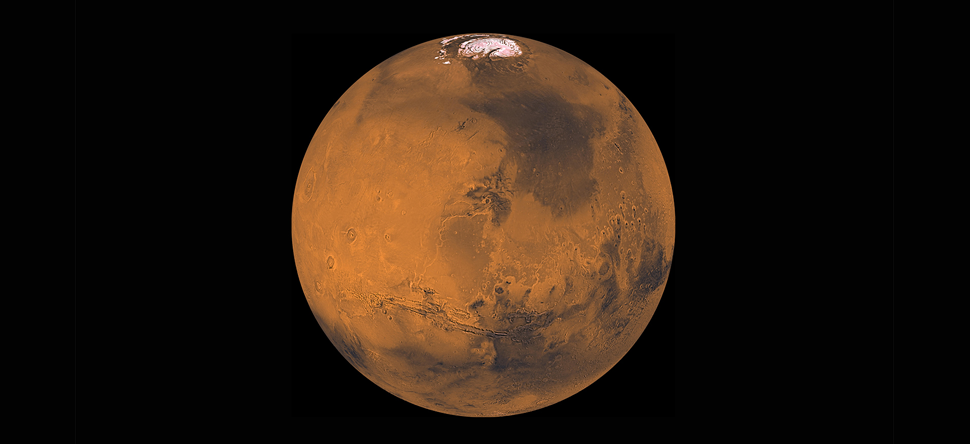
The TRI team is charged with looking for solutions to reduce astronauts’ risk while aboard long-term space exploration missions. Their current focus is on a proposed exploration to Mars, a 24-30 month mission. The recent call for proposals is specifically interested in nine topic areas including innovative alternatives to performing invasive surgery; portable techniques for human brain imaging; and increasing resistance to radiation.
Strangman and the team want to identify novel, disruptive technologies that may be outside the traditional development pathway for everyday clinical care. “Generally something that works well on Earth doesn’t necessarily work for NASA,” explains Strangman. “The mantra in NASA world is ‘mass, power, volume, time, money and risk’. You want to reduce all of those.”
Clinical Impact
While these constraints can be frustrating at times, they can also spark creative new approaches that not only work in space, but could also provide benefits to clinical care back here on Earth.
One challenge that researchers faced was the higher likelihood of astronauts developing kidney stones due to the bone loss that occurs during space travel.
To address this problem, researchers developed a new technique that utilizes ultrasound technology to manipulate kidney stones with the body to a position where they can pass naturally, thus alleviating the acute pain that often accompanies their passing. Another technique uses a sequence of ultrasound pulses to grind stones into dust.
These solutions also have implications on Earth, as hospitals are now using ultrasound technology to push stones, and hope to soon apply the pulverizing technique as well.
Strangman predicts emerging brain imaging technology could have a similar reciprocal impact.
The majority of brain imaging technologies here on Earth aren’t suitable for space travel because the procedures are too cumbersome and cost prohibitive.
He and his team are investigating ways to develop portable technology that would strap on the head and provide results within 24 hours monitoring. This technology could then be applied back to Earth and used on the sidelines at sporting events to immediately evaluate potential concussions, or in ambulances to provide stroke assessment after falls.
Addressing NASA’s Concerns
Such compact technological advancements could also help solve the issue of volume aboard the aircraft. Due to the space constraints provided by NASA, a crew heading to Mars can only bring the equivalent of two shoeboxes worth of medical supplies, which includes everything from band-aids and medications to defibrillators. TRI’s mission is to identify breakthrough technologies that may remove the need for some items that would otherwise have to fit into those boxes, such as using noninvasive ultrasound technology in lieu of surgical tools.
While not covered under the purview of this call for proposals, another key area of interest for NASA and Strangman in particular are the long-term psychological effects of space travel. The unknown variable is how astronauts will handle working and living with five professional acquaintances in very close quarters for extended periods of time with no options for escape.
To help predict how astronauts will fair in space, NASA has run isolation tests at the Johnson Space Center in Houston, Texas and at remote camps in Antarctica. However, these tests have only operated for a few weeks at a time and are usually based on real-time external communications, a far cry from the 5-22 minute delay astronauts will face on an actual mission. While the conditions aboard a space mission are hard to mimic on Earth, NASA is interested in identifying technologies and procedures that will help them better predict and treat psychological issues that may arise.
Strangman is also using mathematical modeling systems to predict the likelihood of the crew experiencing certain medical events. But even with the best plans, projections and technologies, there will be some situations that the research teams just can’t prepare for, Strangman acknowledges
“There are some things we just don’t know. Like psychologically, what’s going to happen when you look back towards Earth and it’s a little white dot in the sky that looks like any other star out there?”
About the Mass General Research Institute
Massachusetts General Hospital is home to the largest hospital-based research program in the United States. Our researchers work side-by-side with physicians to develop innovative new ways to diagnose, treat and prevent disease.
Support our research


Leave a Comment